
5 Signs You Need a Professional Denture Reline or Repair
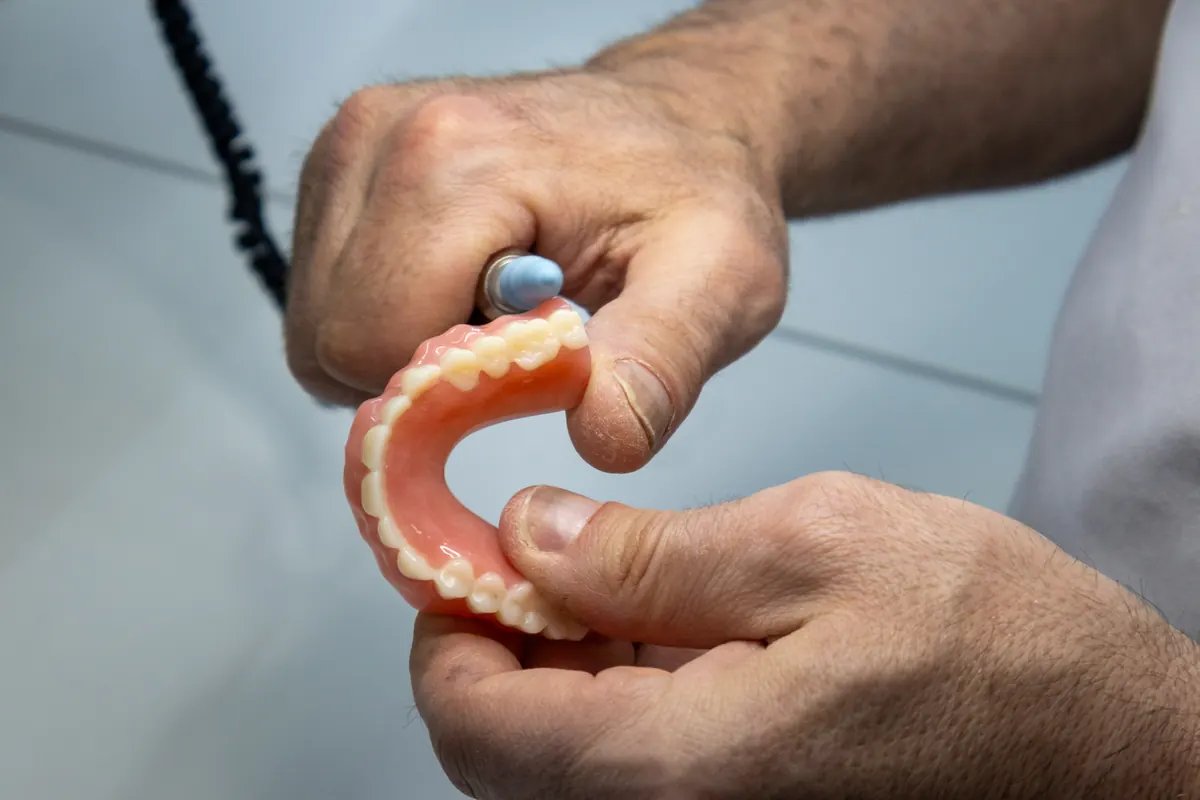
Dentures do not stay the same fit forever — your gums and jawbone gradually change, while the denture itself holds its shape. The gap that opens up is the most common reason dentures start to feel loose or uncomfortable. This article covers five clear signs it is time for a professional denture reline or repair, and what to do about them, with guidance from our Preston clinic.
1. Constant Denture Slippage & Loose Fit
If your upper denture loses suction or your lower denture lifts when talking, eating, or laughing, your gum contours have changed and require a custom denture reline. A loose denture is not just annoying — it can rub and cause sore spots over time.
Slippage tends to creep up slowly, so you may not notice how loose it has become until it moves at an awkward moment. If you are using more adhesive than usual, that is often a sign the fit has changed.
2. Recurrent Denture Sore Spots and Inflammation
Uneven pressure from an ill-fitting denture base rubs raw spots onto sensitive gum tissues. A professional reline redistributes bite force evenly across your ridge, which helps the sores settle and stops them coming back.
If the same spot keeps getting sore even after it heals, the denture is pressing there because it no longer fits evenly. A reline or a small adjustment can relieve that pressure point.
3. Hairline Cracks, Micro-Fissures, or Chipped Teeth
Never ignore small cracks in acrylic dentures. Chewing forces expand hairline cracks into complete denture fractures. Same-day professional denture repair restores acrylic strength before the crack spreads.
A tiny crack is far cheaper and easier to repair than a full break. If you can see or feel a crack, or a tooth has chipped, it is worth booking a repair rather than waiting for it to get worse.
- Visible cracks or hairline lines in the acrylic
- A chipped or missing denture tooth
- A loose clasp on a partial denture
- A clicking sound when you bite down
4. Changes in Your Bite or Chewing
If your teeth do not meet the way they used to, or chewing feels uneven and uncomfortable, your denture may have warped or your bite has shifted. This can put strain on your jaw joints and remaining natural teeth.
Bite changes can also come from gradual bone loss under the denture. A reline refreshes the fit against the gum, and a prosthetist can check whether the bite needs adjusting.
5. Persistent Discomfort or Gum Irritation
Generalised discomfort that does not settle, or gums that look red and inflamed where the denture sits, can mean the fit is off or there is an underlying issue like a fungal infection. Neither should be ignored.
Comfort is a reasonable expectation with a well-fitting denture. If yours is regularly uncomfortable, a review can pinpoint whether it needs a reline, a repair, or a check of your gum health.
Reline vs Repair: Which Do You Need?
A reline refreshes the fitting surface of a denture that is otherwise in good condition, while a repair fixes cracks, broken teeth, or damaged clasps. Sometimes you need both — a repair to fix damage and a reline to improve fit.
A prosthetist can examine the denture and tell you honestly which is needed. In some cases, if the denture is worn out, they may suggest a replacement instead of repairing a denture that is near the end of its life.
When to See a Dental Prosthetist
If you notice any of these signs — a loose fit, sore spots, cracks, or bite changes — book a review with our Preston clinic. A dental prosthetist can assess whether you need a reline, a repair, or a replacement and stop small issues turning into painful ones. Call us on 9041 6443.
Key Takeaway
Looseness, sore spots, cracks, bite changes, and ongoing discomfort are the five clearest signs it is time for a denture reline or repair. Early attention keeps your denture comfortable and prevents bigger, costlier problems.
Frequently Asked Questions
Have a Question About Your Care?
Our clinical team is happy to discuss any aspect of your dental or denture health. We offer initial consultations for all new patients in Preston.
Related Articles
Valplast Dentures: What They Are, Who They Suit and the Trade-Offs
A Valplast denture is a flexible partial denture, made from a thermoplastic nylon instead of hard acrylic or metal. This guide covers who it suits, how it compares with Flexite and with metal partials, and the trade-offs.
Digital Dentures vs Conventional Dentures: What Actually Differs
Digital dentures vs conventional dentures is mostly a question about how the denture is made, not what it is. Here is what actually differs, and where the research stops short of a clear winner.
How Much Do Dentures Cost in Australia? What We Charge and Why
How much do dentures cost in Australia? It depends on the type of denture, the materials and who makes it. We publish our prices, and this guide explains what decides the price at Preston Dentures and what your quote includes.