
Digital Dentures vs Conventional Dentures: What Actually Differs
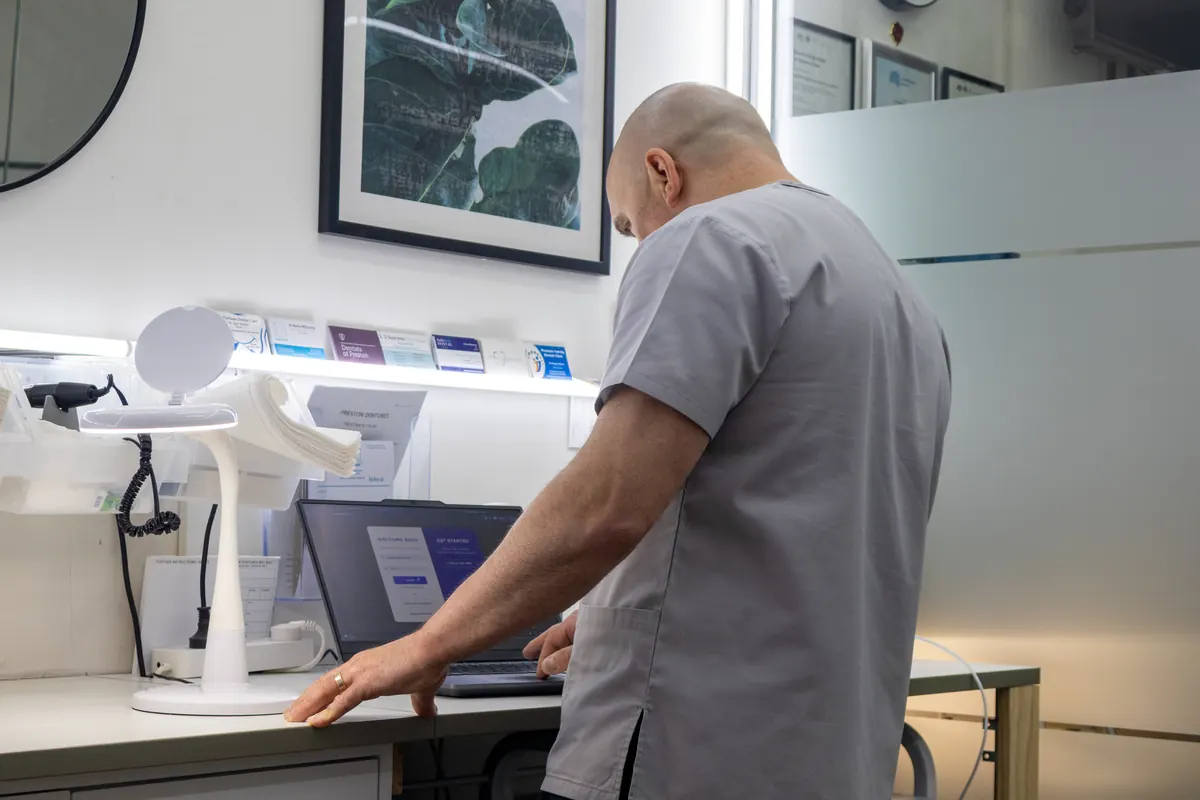
Digital dentures vs conventional dentures is mostly a question about how the denture is made, not what it is. Both are removable dentures that sit on your gums and are fitted by a dental prosthetist. At Preston Dentures we make both in our own laboratory at 324 High Street, Preston, so we have no reason to push you towards one. Here is what actually differs, and where the research stops short of a clear winner.
What's the difference between digital and conventional dentures?
Digital dentures are designed on a computer and then milled or 3D-printed, while conventional dentures are shaped in wax and processed in acrylic by hand. Either way you end up with a removable denture that sits on your gums and is checked and adjusted by a dental prosthetist.
With a conventional denture, the teeth are set in wax and tried in your mouth, then the wax is replaced with acrylic in the laboratory. With a digital denture, the shape and bite are designed on screen from an accurate model of your mouth before anything is made, and we keep the design file afterwards. Our digital dentures page explains the milled and 3D-printed options.
Are digital dentures better than conventional dentures?
Not clearly, and anyone who says otherwise is going further than the research does. A systematic review of six studies found that CAD/CAM dentures retained better and patients rated them higher for comfort and chewing, while a 2026 randomised trial of 23 patients found no significant difference in overall satisfaction.
The same review's authors point out that there were few studies, the patients weren't randomised, and longer follow-up is needed. The trial was small too. Read together, they suggest digital dentures are a reasonable option, not a guaranteed upgrade.
Are digital dentures quicker to make?
They can be. In the 2026 trial, the conventional protocol took five clinical visits and the digital workflow took three, and the earlier systematic review reported between 171 and 223 minutes saved in total chairside and laboratory time.
Those are research figures, not a promise about your treatment. A digital denture at Preston Dentures still starts with a consultation and still has a try-in before it is finished, because that is where you and the prosthetist check how it looks and feels.
Do digital dentures fit better?
One study in the review found digital dentures adapted better to the gum surface, which the authors put down to more standardised steps and less shrinkage as the acrylic sets. That is a single study, so it is a reason to be interested rather than a reason to expect a better fit.
Fit is decided at the try-in and the adjustments afterwards, whichever way the denture is made. If your current denture is loose or sore, the cause may be changes in your gums rather than how it was made, which is covered in our post on jawbone resorption and denture fit.
When is a conventional denture the better choice?
It depends on your mouth and what you want from the denture, so we decide it with you at the examination rather than by a rule. If we think a conventional denture is the better route for you, we will say so.
We make both kinds in the same laboratory, so our advice isn't driven by what we happen to be set up to do. At your free consultation we look at your gums, your current denture if you have one, and what you want from the new one, then tell you which route we would take and why. If conventional is the better fit, that is what we will quote.
How much more do digital dentures cost than conventional dentures?
At Preston Dentures, a 3D-printed digital denture is $2,150–$2,950 per arch and a milled one is $3,250–$3,980 per arch, compared with $1,699–$2,699 for a standard full denture on a single arch. Your exact quote comes after an examination.
| Denture (single arch) | Published range | How it's made |
|---|---|---|
| Standard full denture | $1,699–$2,699 | Wax and acrylic |
| Premium full denture | $2,450–$3,450 | Wax and acrylic |
| 3D-printed digital denture | $2,150–$2,950 | Designed on screen, printed from dental resin |
| Milled digital denture | $3,250–$3,980 | Designed on screen, milled from a solid acrylic block |
Prices are from our pricing page. A price range doesn't tell you which type is right for you. In the trial above, the estimated provider cost of the digital workflow was about 36% lower, but that was the cost to a university clinic, not a shop price.
Can a digital denture be remade from a saved file?
Yes. We keep your design file, so if a denture is lost or breaks we can make a replacement without taking new impressions.
Gums and jawbone change over the years, so we would still check how the replacement fits before finishing it. As the Polident guide notes, shrinking gums and jaw bone can make dentures loose over time.
Next step. If you're deciding between the two, your first consultation is free and there's no pressure to choose on the day. Book your free consultation or call (03) 9041 6443.
Key Takeaway
Digital dentures are designed on a computer and then milled or 3D-printed, while conventional dentures are shaped in wax and processed in acrylic by hand. The research doesn't show a clear winner, so digital is a reasonable option rather than a guaranteed upgrade. We make both kinds in our own laboratory, and your first consultation is free with no pressure to choose on the day.
Frequently Asked Questions
Next step
If you're deciding between the two, your first consultation is free and there's no pressure to choose on the day.
324 High Street, Preston VIC 3072 · Mon–Thu 10am–5pm · Fri 10am–2pm · Sat by appointment · All visits by appointment
About the author
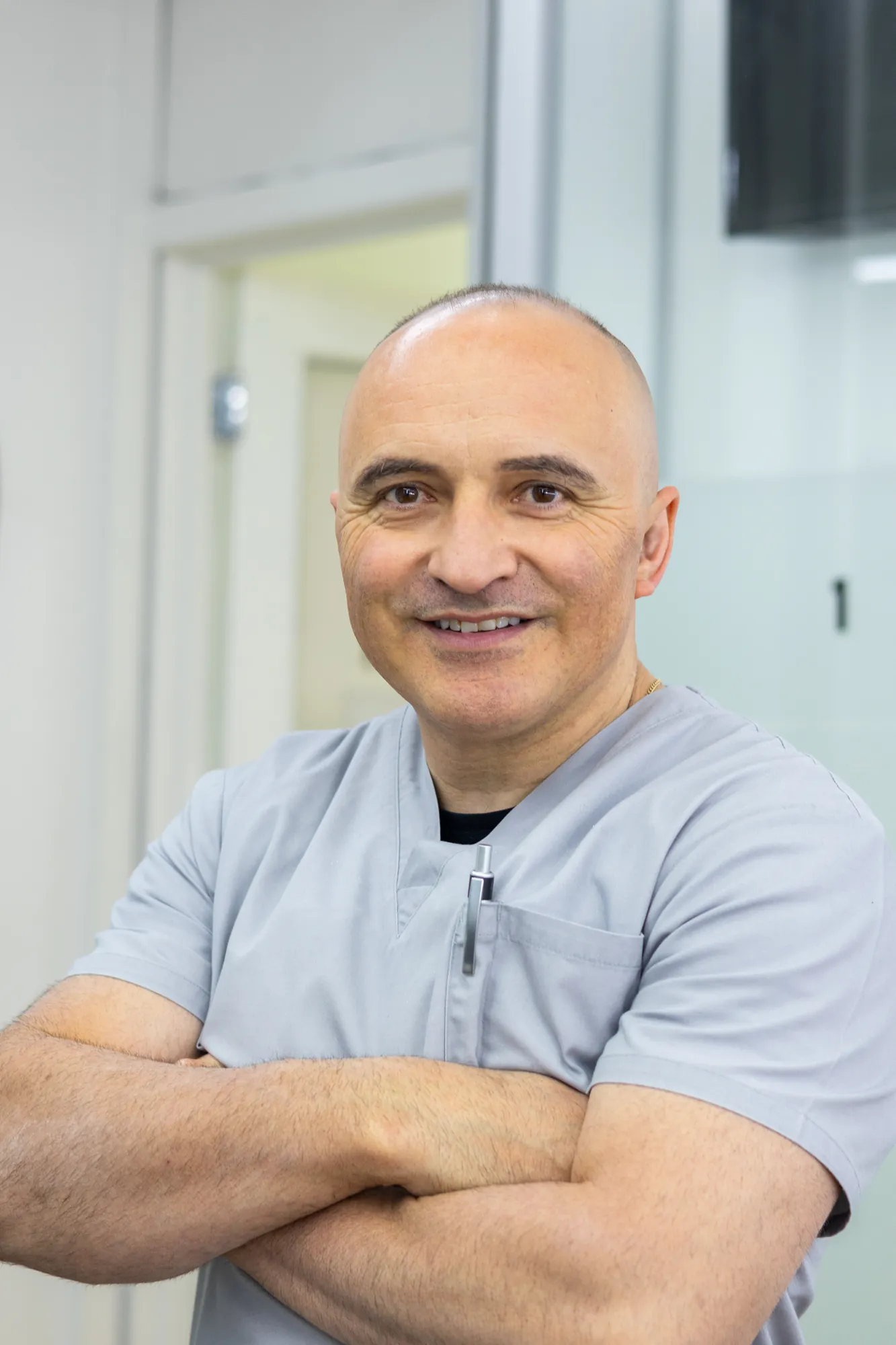
Dragan Flajnik is a dental prosthetist with over 20 years of experience. He makes dentures in the on-site laboratory at Preston Dentures, 324 High Street, Preston VIC 3072.
Related Articles
3D Printed Dentures vs Milled Dentures: Which Should You Choose?
Comparing 3D printed dentures and milled dentures? This guide explains how each is made, what the research does and doesn't show, what each costs at Preston Dentures, and how we'd weigh the choice.
How Are Dentures Made? Step by Step, From Examination to Fitting
A denture starts with an examination and impressions of your gums, goes through a bite record and a try-in, and is then finished in the laboratory and fitted. Here is each step and what it is for.
Understanding Jawbone Resorption and How It Affects Denture Fit
Discover why your gums and jawbone shrink after tooth loss and how custom prosthetics maintain facial structure.