
How Long Do Dentures Last? What to Expect and When to Replace Them
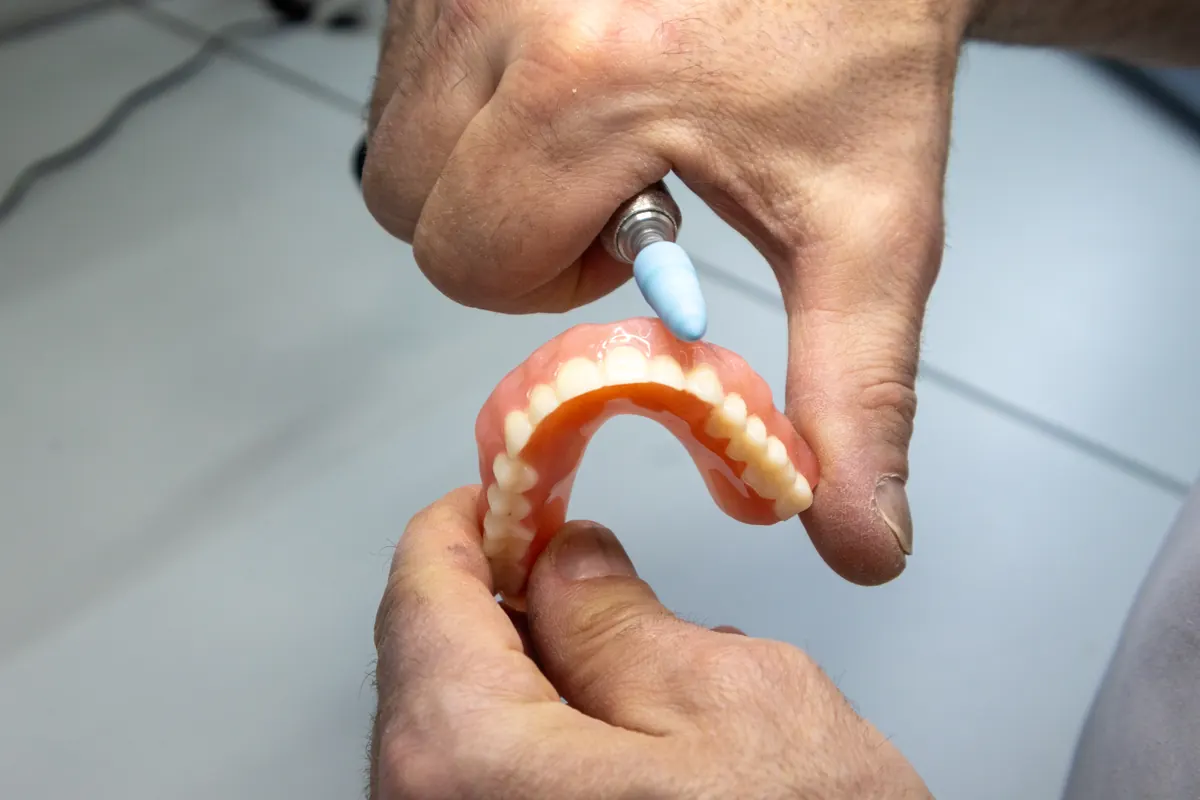
How long do dentures last? It depends less on the denture than on your mouth, because gums and jawbone keep changing after the teeth are gone. Published answers range from about three years to ten, which can be confusing. This guide sets out what the sources say, the signs that a denture needs attention, and how we decide between a reline and a replacement at Preston Dentures.
How long do dentures last?
Sources give different answers, from around three years before maintenance or remaking is needed to five to ten years with good care. The honest answer is that it depends on your mouth, the type of denture, and how often it is checked.
| Source | What it says |
|---|---|
| HIF Australia (Dr Emma) | “On average, a denture can be expected to function for around 3 years before maintenance or remaking is needed” |
| Polident Australia | Dentures should last between five and ten years when properly maintained and securely fitted |
| healthdirect | See your dentist or dental prosthetist at least yearly to check they still fit correctly |
These ranges aren't necessarily in conflict, because “still working” and “needs maintenance or remaking” are different measures.
Why do dentures stop fitting over time?
As we get older our gums and jawbone shrink, which is called bone resorption, and that can make a denture loose even though the denture itself hasn't changed. Wear on the teeth and base adds to it, according to the Polident guide.
We cover the process in more detail in our post on jawbone resorption and denture fit.
What are the signs you need new dentures?
Clicking when you talk, less comfort than before, irritated gums and visible wear are all signs to get your denture checked, according to Polident. If a denture is loose or sore, don't wait for your yearly check.
The sooner a problem is looked at, the more options there are. We can often repair or adjust a denture on its own; see denture repairs.
Can a reline fix it, or do you need a replacement?
A reline or rebase can restore fit when the denture itself is still in good condition, while a replacement is needed when it is worn or the teeth and bite have changed. Which one you need is decided at an examination, as Polident also notes: the solution may be relining, rebasing or replacing.
At an examination we check how the denture fits, how worn the teeth and base are, and how your gums have changed, then tell you whether a reline will do or whether a new denture is the better answer. If a reline is enough, we will say so.
Our denture relines page explains the soft and hard options.
What's involved in getting replacement dentures?
Replacement dentures follow the same steps as a first set: an examination, impressions or a scan, a try-in, and a fitting. If your first set was a digital denture, we keep your design file, so a replacement can be made without new impressions.
Prices for full sets are on our pricing page, and our standard dentures page has the details.
Is it worth having a spare set?
A spare set gives you something to wear if your denture breaks or is in the laboratory for repair. For digital dentures, the stored design file means a second denture can be made without starting from new impressions.
It's a decision to make with your prosthetist, because a spare made from an old design may not fit once your gums have changed.
How can you make dentures last longer?
Have your dentures checked at least once a year, which is what healthdirect advises, and get a loose or cracked denture looked at early rather than waiting. That check is also when we can tell you whether a reline would help.
Next step. If your denture is loose, sore or just feels different, your first consultation is free. Book your free consultation or call (03) 9041 6443.
Key Takeaway
Published answers range from about three years to ten, because 'still working' and 'needs maintenance or remaking' are different measures. Gums and jawbone change over time, so have your dentures checked at least once a year and get a loose or sore denture looked at early. A reline can restore fit when the denture is still in good condition; otherwise a replacement is needed.
Frequently Asked Questions
324 High Street, Preston VIC 3072 · Mon–Thu 10am–5pm · Fri 10am–2pm · Sat by appointment · All visits by appointment

About the author
Dragan Flajnik is a dental prosthetist with over 20 years of experience. He makes dentures in the on-site laboratory at Preston Dentures, 324 High Street, Preston VIC 3072.
Related Articles
Understanding Jawbone Resorption and How It Affects Denture Fit
Discover why your gums and jawbone shrink after tooth loss and how custom prosthetics maintain facial structure.
Valplast vs Acrylic: Choosing the Right Partial Denture Material
Weighing up a flexible Valplast partial against a conventional acrylic partial? Here is how the two materials compare on looks, comfort, durability and cost.
The Complete Guide to Denture Care & Maintenance
Learn how to keep your dentures clean, fresh, and properly maintained for maximum longevity and oral health.