
How Digital 3D Impressions & CAD/CAM Modernise Custom Dentures
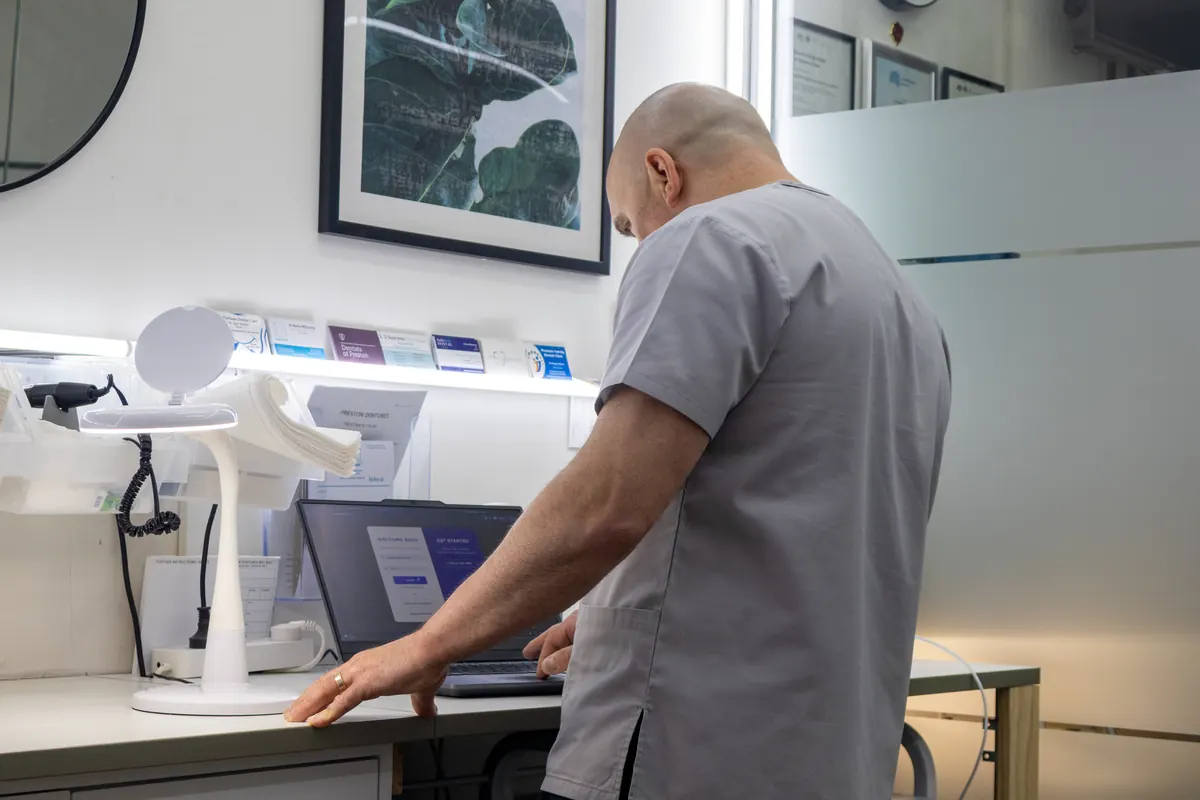
Digital 3D scanning has changed how dentures are designed, making the process cleaner, faster, and more comfortable for many patients. Instead of biting into a tray of messy impression putty, a small scanner builds an accurate 3D model of your mouth. This article explains how digital 3D scanning works, how it improves denture fit, and how we use it alongside conventional methods at our Preston clinic.
What Is Digital 3D Scanning?
A digital intraoral scanner is a small handheld wand that captures thousands of images of your mouth and stitches them into an accurate 3D model on screen. There is no putty, no tray, and no waiting for material to set.
The scan appears live on a screen so you and your prosthetist can see the shape of your mouth together. The digital model is then used to design your denture in software, which is sent to the laboratory for milling or 3D printing.
Gag-Free Impression Taking
Optical 3D scanning eliminates traditional gooey impression materials, providing a clean, fast, and comfortable experience for gag-sensitive patients. For anyone who has dreaded the tray of putty, the scanner is a welcome change.
Because the wand is small and the process is quick, it is far easier to tolerate, especially for people with a strong gag reflex or who find traditional impressions claustrophobic. The prosthetist can pause and resume the scan at any point.
How Digital Scanning Improves Denture Fit
Digital denture design software calculates exact tooth spacing, occlusion, and jaw relationships, which can lead to improved retention and fewer adjustment appointments. The digital model is precise and does not distort the way putty can as it sets.
Because the design file is stored, a replacement denture can be made later without taking new impressions. This is a real benefit if a denture is lost or damaged — your record is on file and ready to use.
- Accurate digital model with no putty distortion
- Comfortable for gag-sensitive patients
- Stored design file for easier replacement later
- On-screen design for precise tooth placement
Scanning Alongside Conventional Methods
At PRESTON DENTURES, we use intraoral scanning alongside conventional impression methods to achieve the best possible results for each patient. Scanning is excellent for many cases, but conventional impressions still have a role where they suit a particular situation better.
Choosing the right method depends on your mouth, the type of denture, and what will give the most accurate result for you. We will recommend the approach that suits your case during your consultation, rather than assuming one method fits everyone.
Is Digital Scanning Right for Everyone?
Digital scanning suits most patients and is especially welcome for those who gag on traditional impressions. In some cases a conventional impression may still be preferred, for example where a particular technique or material is needed.
The best way to know is to discuss your options with a prosthetist, who can assess your mouth and explain which method will give the most accurate, comfortable result for your denture.
When to See a Dental Prosthetist
If you have been putting off dentures because you dread impression putty, or you are curious whether digital scanning suits your case, book a consultation. A dental prosthetist can assess your mouth and recommend scanning, conventional impressions, or a combination. Call our Preston clinic on 9041 6443 to find out more.
Key Takeaway
Digital 3D scanning offers a comfortable, gag-free alternative to impression putty and produces an accurate stored model for precise denture design. We use it alongside conventional methods to suit each patient.
Frequently Asked Questions
Have a Question About Your Care?
Our clinical team is happy to discuss any aspect of your dental or denture health. We offer initial consultations for all new patients in Preston.
Related Articles
Valplast Dentures: What They Are, Who They Suit and the Trade-Offs
A Valplast denture is a flexible partial denture, made from a thermoplastic nylon instead of hard acrylic or metal. This guide covers who it suits, how it compares with Flexite and with metal partials, and the trade-offs.
Digital Dentures vs Conventional Dentures: What Actually Differs
Digital dentures vs conventional dentures is mostly a question about how the denture is made, not what it is. Here is what actually differs, and where the research stops short of a clear winner.
How Much Do Dentures Cost in Australia? What We Charge and Why
How much do dentures cost in Australia? It depends on the type of denture, the materials and who makes it. We publish our prices, and this guide explains what decides the price at Preston Dentures and what your quote includes.