
Dealing with Denture Sore Spots: Fast Relief & Adjustments
Sore spots are one of the most common denture complaints, and they are usually easy to fix. They happen when a part of the denture presses too hard on a small area of gum, creating a tender pink spot. This article explains what causes sore spots, how to get relief at home, and how a quick clinic adjustment sorts them out at our Preston clinic.
What Causes Denture Sore Spots
Sore spots happen when the denture base presses unevenly on the gum. This can be because the denture is new and your mouth is still adapting, because the fit has changed after a reline, or because a slight high spot is taking too much pressure.
The pressure creates a small, tender, pink area on the gum. It is not usually serious, but it does get more uncomfortable if left. The good news is that the cause is almost always a small, fixable pressure point.
Identifying a Pressure Spot
A sore spot usually shows up as a tender pink or red area on the gum, often within a day of wearing a new or relined denture. It may sting when you press on it or when the denture is in place. The denture itself might feel fine otherwise.
If you can, note roughly where the soreness is so you can tell your prosthetist. The location helps them find the exact spot on the denture base that needs trimming. The spot on your gum is the clue to the spot on the denture.
- Tender pink or red area on the gum
- Pain when the denture is in place or pressed
- Often appears within a day of new wear
- Usually localised to one spot rather than widespread
At-Home Warm Salt Water Rinses
Rinsing your mouth with warm salt water 3 times a day soothes inflamed gum tissue and speeds natural tissue recovery. Dissolve half a teaspoon of salt in a glass of warm water and rinse gently.
Removing the denture for a few hours, or overnight, also gives the gum a chance to recover. These home measures ease the discomfort but do not fix the underlying pressure point — that needs a clinic adjustment.
Wear Dentures Before Your Clinic Adjustment
Wear your dentures for at least 3 to 4 hours prior to your adjustment appointment so your prosthetist can clearly see the pink pressure mark on your gum. The mark shows exactly where the denture is pressing too hard.
If you arrive without having worn the denture, the gum may have recovered and the mark faded, which makes it harder to find the spot. Wearing it beforehand is the most helpful thing you can do to make the adjustment accurate.
Minor Clinic Acrylic Trimming
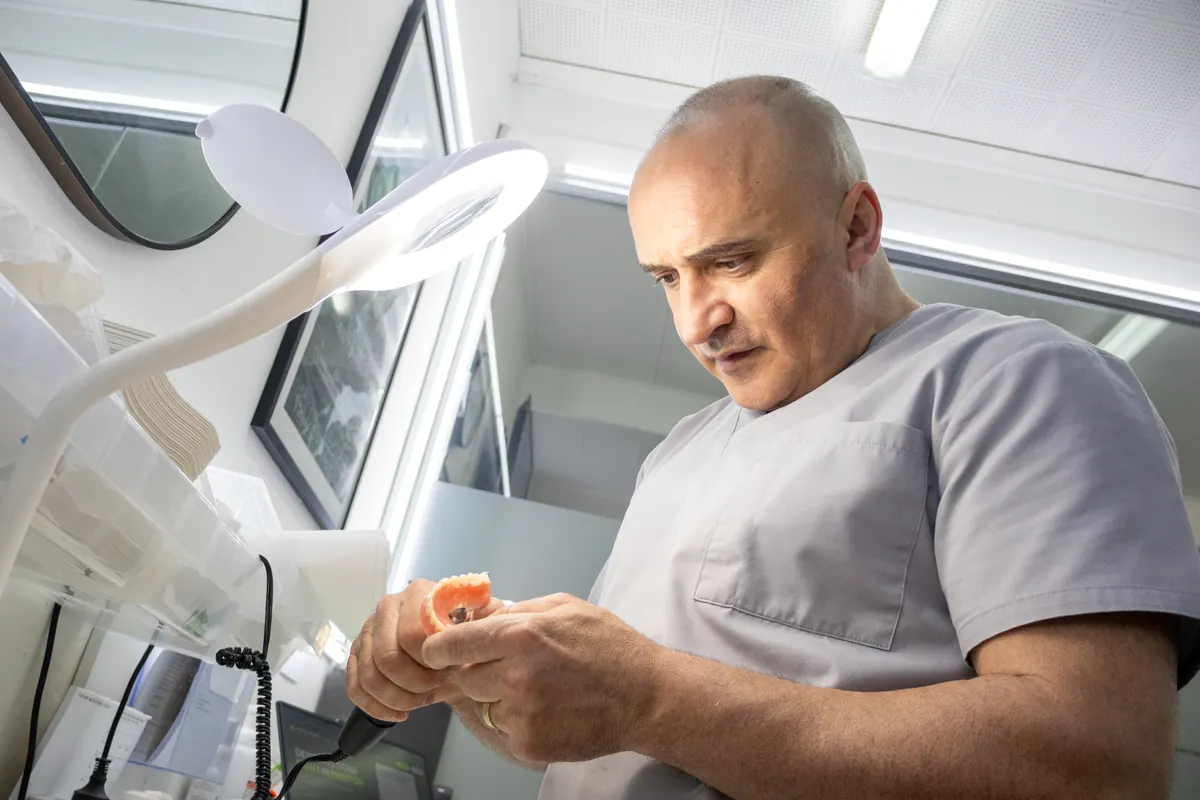
Using high-speed laboratory burs, our team relieves high-pressure spots in minutes, giving instant comfort. The prosthetist trims a tiny amount of acrylic from the denture base where it is pressing on the sore spot.
After the trim, the denture is checked in your mouth to confirm the pressure is relieved. This is a quick, routine appointment, and the relief is usually immediate. It is one of the simplest fixes in denture care.
When to See a Dental Prosthetist
If a sore spot has not settled after a couple of days of saltwater rinses and rest, or if it is getting worse, book an adjustment. Do not file the denture yourself, as you can create a new problem. A dental prosthetist can trim the pressure point in minutes. Call our Preston clinic on 9041 6443 to book.
Key Takeaway
Sore spots come from localised pressure and are fixed with a quick clinic trim. Rinse with warm salt water, wear the denture before your appointment so the pressure mark shows, and book an adjustment for lasting relief.
Frequently Asked Questions
Have a Question About Your Care?
Our clinical team is happy to discuss any aspect of your dental or denture health. We offer initial consultations for all new patients in Preston.
Related Articles
Valplast Dentures: What They Are, Who They Suit and the Trade-Offs
A Valplast denture is a flexible partial denture, made from a thermoplastic nylon instead of hard acrylic or metal. This guide covers who it suits, how it compares with Flexite and with metal partials, and the trade-offs.
Digital Dentures vs Conventional Dentures: What Actually Differs
Digital dentures vs conventional dentures is mostly a question about how the denture is made, not what it is. Here is what actually differs, and where the research stops short of a clear winner.
How Much Do Dentures Cost in Australia? What We Charge and Why
How much do dentures cost in Australia? It depends on the type of denture, the materials and who makes it. We publish our prices, and this guide explains what decides the price at Preston Dentures and what your quote includes.